Learning to see: how other photographers can help you find your own street photography style
How do you find a street photography style that is yours, and not a copy of someone else’s?
We get asked this a lot, and the honest answer is that you find it by looking hard at the people who got there before you, then doing the opposite of copying them. Copying gives you their answers. What you want is their questions. You want to see the visual problem a photographer was standing in front of, the mess of a street, the people, the space, the light, the layers, and you want to understand the decision they made to turn that mess into a picture. That decision is the thing you learn from. The picture is just the thing you want.
Why look at other photographers at all?
Because no one’s imagination is as good as the real world, and the real world on a busy street is overwhelming. Too much is happening. The beginner’s problem is not a lack of subjects, it is a lack of ways to organise what is already there. Looking at other photographers is how you build a library of ways to organise.
When I look at Robert Frank’s The Americans, I am not trying to make a road trip across a country I do not live in. I am looking at how Frank sequenced a book, how he let a flag, a jukebox, a face out of focus carry weight across 83 images, so the meaning builds across the book and not inside any single frame. When I look at Alex Webb work, I am not trying to make a Webb image, I am asking how he holds five or six things in one frame at once, near and far, in colour, without it collapsing into noise. Webb is famous for working a scene, adding layers or elements within the frame. That is his method, you can see more of it in his book The Suffering of Light.
There is a good piece on this from the Phoblographer on building personal style and perspective, and Contrastly has a sensible one on developing your style that makes the same point I would, you start with influence and you push through it, you do not stop at it.
What are you actually learning from them?
You are learning how someone solved a problem you also have.
In other words, every photographer you admire was once standing on a corner with the same chaos in front of them that you have in front of you, and they found a way to cut it down to an image. Cartier-Bresson solved it with geometry and timing, he waited for the elements to line up and pressed once. William Klein solved it by getting close and letting people react to him, the scene bends toward the camera, it is loud and confrontational and completely his. Helen Levitt and Saul Leiter solved it by staying back, watching, letting the street stay the street. Same problem, four answers, all of them theirs because each one is honest to the person who were.
So when you study the work, study the choice, not the surface. Ask where the photographer was standing. Look at how close they were. Ask what they left out of the frame, because what is excluded tells you more than what is included. Why colour, or why black and white for their images. These are the questions that teach you to see. Joel Meyerowitz, who is largely self-taught and learned by walking New York for years, put a lot of this into Bystander, the history of street photography he wrote with Colin Westerbeck, and it is worth reading slowly. There is a useful overview of Webb’s working method on the About Photography blog if you want to see how one photographer’s decisions stack up across a body of work.
Where does your own seeing come in?
This is the part people skip. You look, you learn the method, and then you have to go out and get it wrong for a long time.
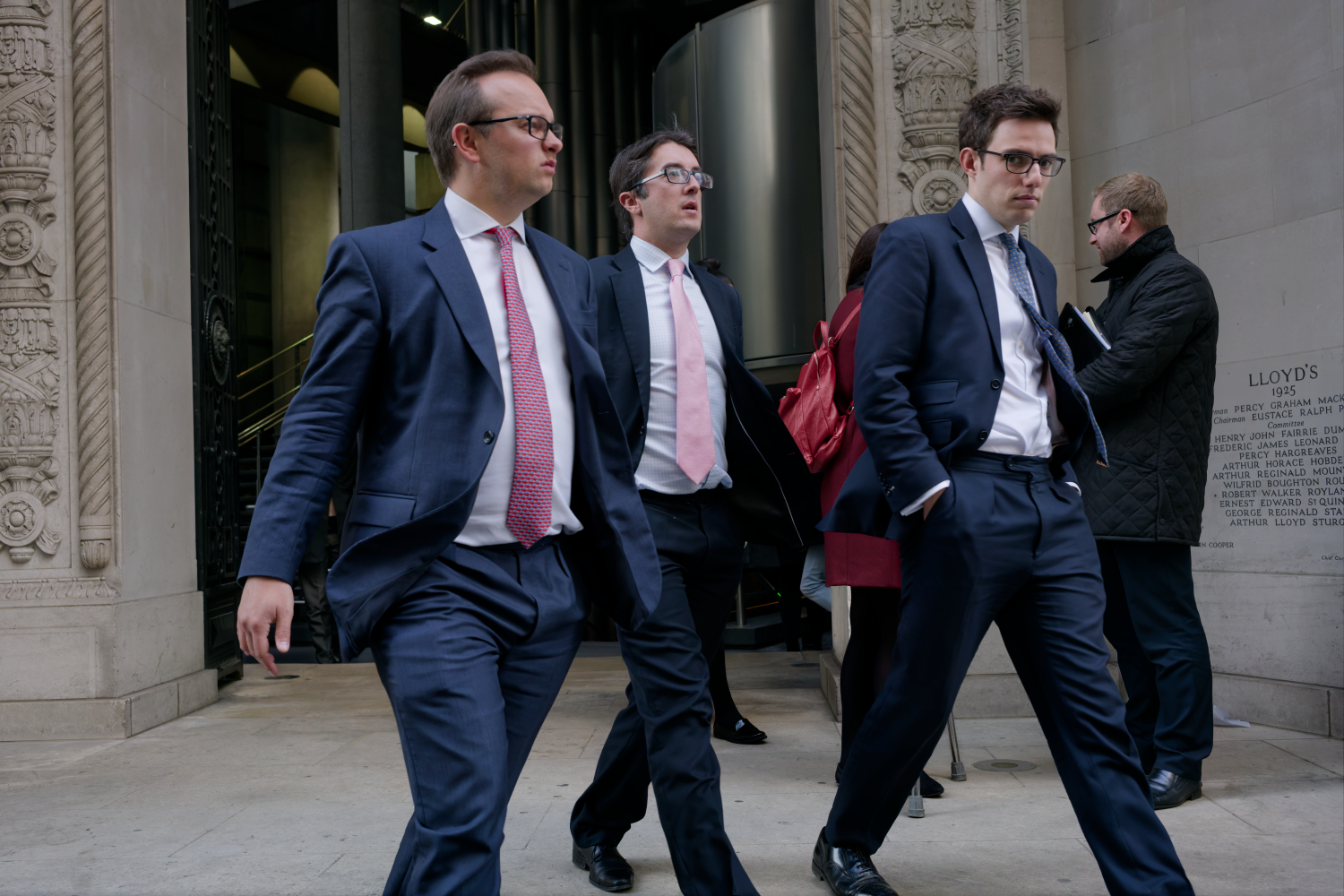
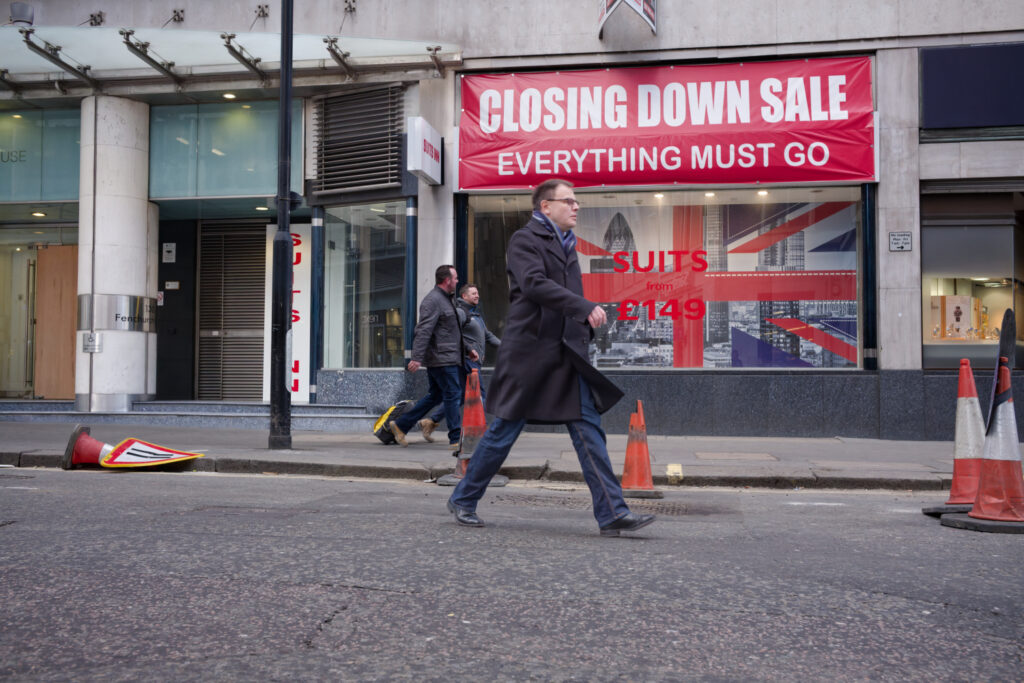
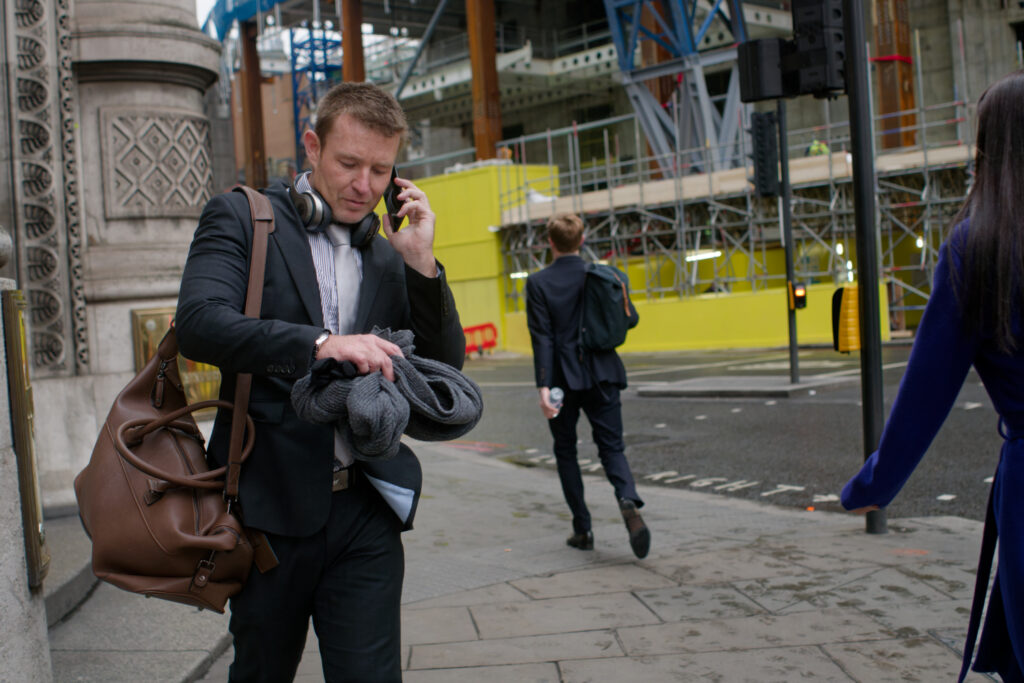
Influence without experiment is just imitation with extra steps. The experiment is where your seeing actually arrives. You take Webb’s layering and you find it does not work for you on a quiet street in your own town, so you adapt it, you drop an element, you change your distance, and somewhere in that failing you start making pictures that look like yours. I made images on streets of the City of London this way, for a project that I am still editing. While I had influences of Robert Frank, Paul Graham and Harry Gruyaert in my head, I was also looking for traces of the financial services industry on the social landscape of the city, and none of them could tell me how to see while standing on Threadneedle Street when making images. I had to find that myself, by going back, again and again, until the seeing became mine.
Serge J-F. Levy has an honest essay on street photography as process at LensCulture that gets at this, the work is the practice, not the result. You do not decide your style. You discover it by doing the work, and the photographers you love are the map, not the territory.
So how do you use your influences?
Look at everything. Look at the photographers who annoy you as much as the ones you love, because the annoyance is information too. Buy the books, the real ones, hold them, study the sequence and the edit, not just the hero images on a screen. Then go out and shoot more than you think you need to, and look at your contact sheets honestly, and notice the frames that feel like nobody else made them. Those are the seeds. Protect them.
The photographers you study show you what is possible, they do not hand you a style. The style comes you making images, and the images comes from you standing on the street long enough that your way of seeing becomes the approach that you cannot switch off. This intentional way of seeing is your street photography style, and no one else can give it to you.
Take what the masters taught you and carry it onto the street, then learn to see what is actually in front of you. The light, the strangers, the corner, the mess of it, none of it is the books, and none of it will arrange itself the way Webb or Frank found it. Apply what you learned, do not copy it slavishly, let their methods blend in with how you see the scene until the picture is yours. Learning to see is easy as it take presence and learning to see actively. You start the moment you walk out the door with your camera.
Leave a Reply